
The Curly-Haired Child: Advocacy, Understanding, and a Plan
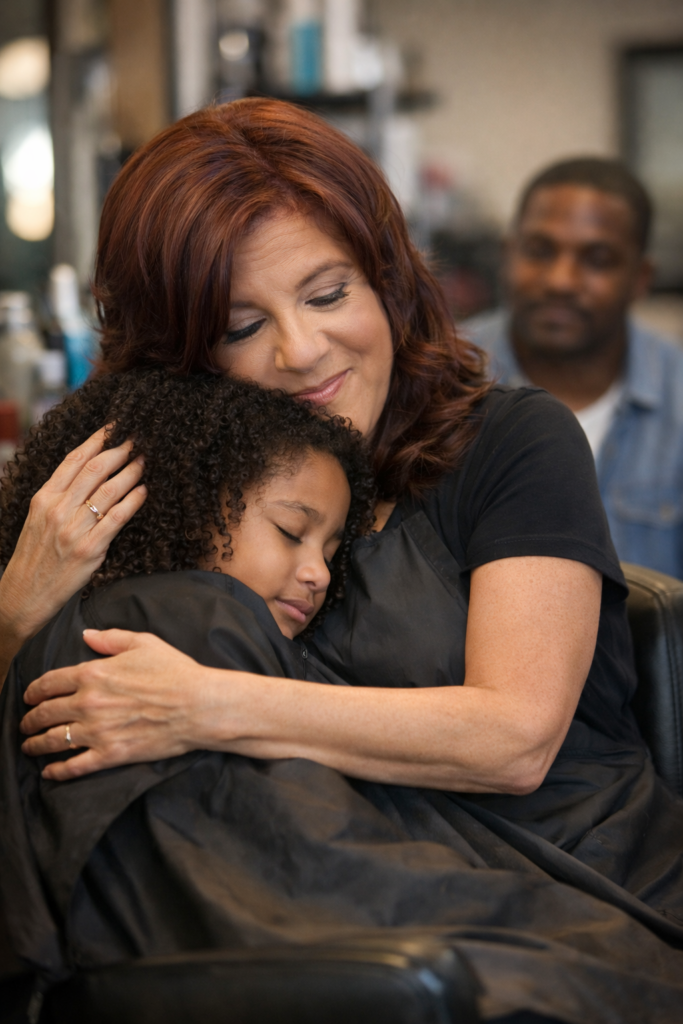 At Hair’s Talent and within the GinaCurl philosophy, we believe that every child deserves to love their hair—especially children with curly, coily, coarse, or textured hair. Caring for a child’s curls is not just about styling; it is about respect, patience, education, and emotional well-being.
Over the years, Gina has worked with countless children of all backgrounds, including many biracial children brought into the salon by parents who did not understand—or in some cases, did not accept—their child’s hair texture.
When Hair Care Becomes Emotional Harm
There have been moments that were deeply disheartening.
Because Gina is white, some parents felt comfortable saying horrific and damaging things about their child’s hair—in front of the child—assuming agreement or silence.
Comments such as:
- “If I knew my child’s hair would be like this, I would have never slept with her father.”
- “One of these days I’m just going to shave it all off—I can’t stand it.”
Let us be clear: this is not hair talk—this is emotional harm.
Those parents were dealing with the wrong stylist.
Gina has asked parents to leave the salon for speaking that way in front of their children. In one instance, the very next day the child returned with her father. Instead of confrontation, he thanked Gina for standing up for his daughter and correcting behavior that should never have been tolerated.
Another time, a mother was warned that severe matting caused by neglect could warrant a call to child protective services. That same mother was the one who made the comment about regretting her child’s father.
Listening to the Child
One of the most heartbreaking moments came when a child quietly asked Gina not to say anything to her mother anymore—because her mother “didn’t like” Gina and would take her to other salons where the process hurt.
Through tears, the child said:
“You never hurt me. I want to keep coming to you.”
As the child grew older, her mother refused to pay for her hair care. When the child came in with her own money, her hair was so severely matted that gentle chemical softening was sometimes required—not for style, but for humaneness, to prevent pain and damage.
Eventually, Gina offered her a job assisting in the salon. Over time, she learned how to care for her own hair—and reclaimed confidence that had been taken from her far too early.
This Is Why GinaCurl Education Exists
At GinaCurl, we teach stylists that curl care is not neutral. Words matter. Tone matters. How a child experiences their hair appointment can shape how they see themselves for life.
We also understand that many parents are overwhelmed—not malicious—but lack education and a plan.
The Curly-Haired Child Needs a Plan
This time of year, especially before school starts, salons fill with children whose hair has been left unmanaged through months of swimming, playing, and carefree fun—which children should absolutely enjoy.
But when curls are neglected, the result is:
- Severe tangling or matting
- Painful detangling sessions
- Fear of salons
- Shame surrounding natural hair
The root issue is almost always the same: lack of a plan.
A proper plan answers:
- How often should my child’s hair be shampooed?
- How do I detangle gently and safely?
- What products work for this texture?
- How often are trims needed?
- How do I style without pain or stress?
Neglect does not make curly hair easier—it makes it harder and more traumatic.
Setting the Stage for Success
Detangling can be uncomfortable even when done correctly. Parents can help by:
- Creating a calm environment (movies, books, music)
- Speaking positively about the salon and stylist
- Offering encouragement—not threats
- Rewarding cooperation, not punishing fear
When bringing your child to a salon, talk us up. Let them know we are trained professionals who went to school to care for their hair—not hurt them.
Seek the Right Professional
Not all stylists work with children—and not all stylists understand curls.
Children with curly, coarse, or ethnic hair need:
- A stylist who understands texture
- A stylist who works gently with kids
- A teaching stylist who educates parents
- Someone who prioritizes hair health and emotional safety
That is the foundation of GinaCurl education.
Our Promise
At Hair’s Talent and GinaCurl:
- We protect children—physically and emotionally
- We advocate when others stay silent
- We teach parents without judgment, but with firmness
- We never agree with cruelty
- We never hurt a child to “get through the hair”
Curls are not a problem to be fixed.
They are an identity to be understood.
And every child deserves that understanding.